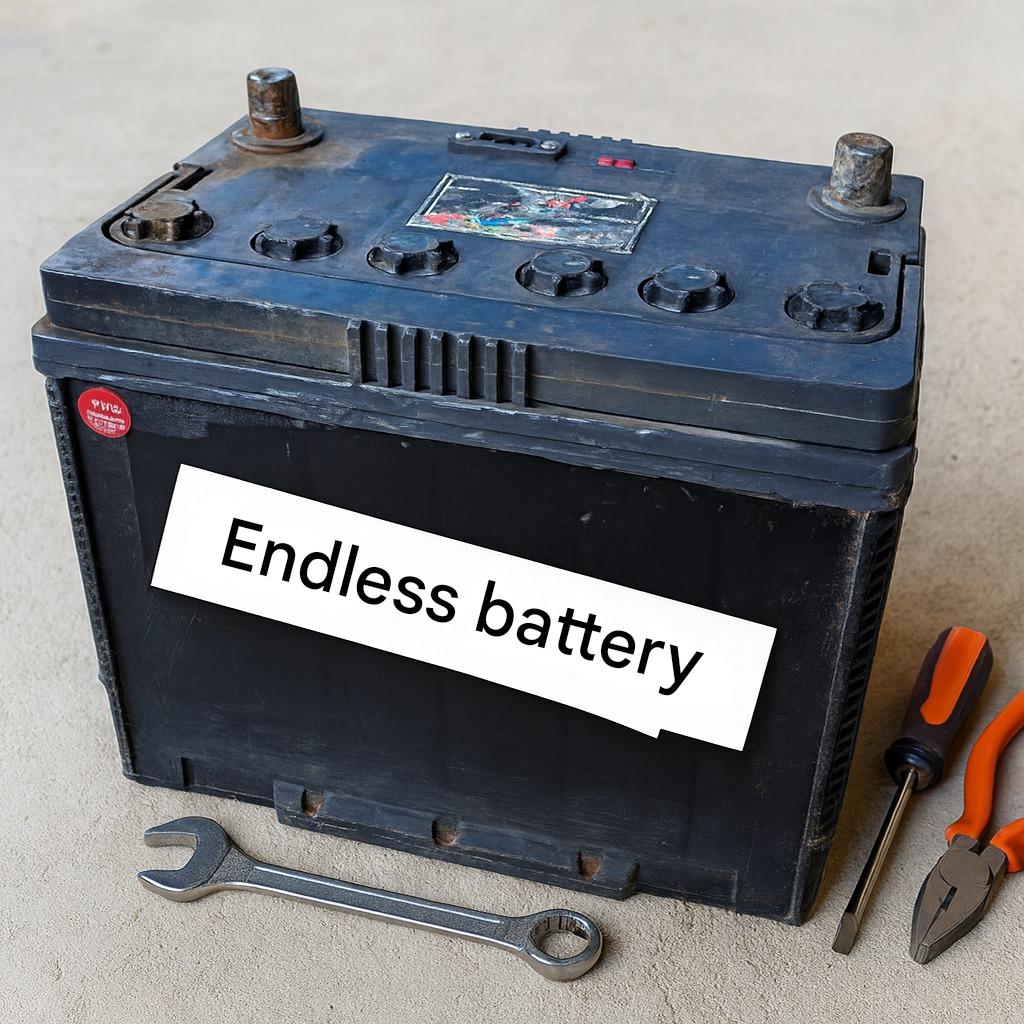
Car batteries are usually seen as a “disposable” part of life. Once they stop starting the engine, most people consider them hazardous waste. But here is the truth that experts and mechanics know: that “dead” battery still holds massive hidden potential.
In the world of home energy, it’s often called the “Infinite Battery” phenomenon. With a few smart steps, you can breathe new life into an old unit and secure extra energy for months—or even years—for free.
🔋 Why does a “dead” battery still have life?
A lead-acid battery rarely dies completely. Usually, it just gets “tired” due to:
-
Sulfation: The accumulation of crystals on the lead plates.
-
Thirst: A simple loss of electrolyte fluid (distilled water + acid).
It might not have the massive “punch” needed to crank a cold engine, but it still has plenty of storage for smaller, useful tasks.
🛠 How to Unlock the “Infinite” Potential
-
Deep Clean: Use a mix of baking soda and water to strip away terminal corrosion. Better contact = better flow.
-
The Fluid Fix: Carefully check the cells. Often, adding a fresh mix of distilled water and sulfuric acid (handled with extreme care!) can restart the chemical reaction.
-
The “Slow & Steady” Charge: Using a smart charger in slow mode for 24–48 hours breaks down those stubborn sulfate crystals. This can recover 60% to 80% of its original capacity!
💡 What can you do with a recycled battery?
Once “revived,” these batteries become incredible auxiliary power sources for:
-
☀️ Solar Storage: Perfect for small home solar setups.
-
🔦 Emergency Lighting: Power your LED lamps during a blackout.
-
🔌 Workshop Power: Use an inverter to run radios, fans, or chargers in your garage.
-
🏕 Camping & Off-Grid: An extra source of juice for your next adventure.
🌱 Save Money, Save the Planet
Discarded batteries are highly polluting. By extending their lifespan, you’re keeping lead and acid out of the soil and getting free energy in return. It’s a win for your wallet and the environment.
⚠️ Pro-Tip & Safety: Always wear gloves and goggles. Work in a ventilated area, and never use tap water—distilled water only. If you aren’t comfortable with DIY chemistry, consult a specialist first!