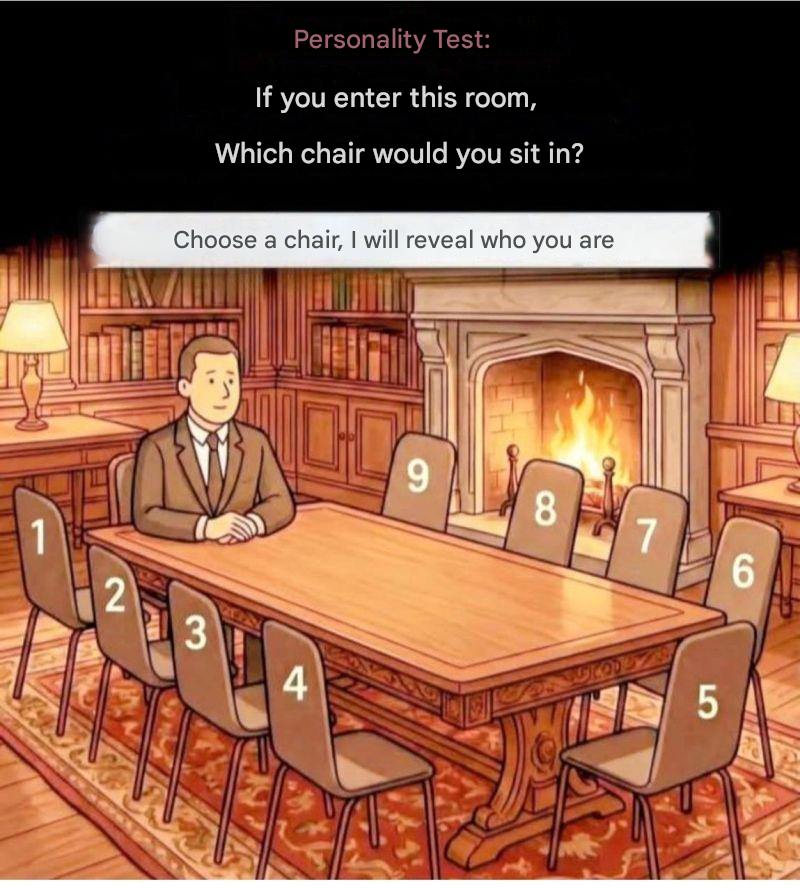
Where will you sit? A delicious journey to discover the power of shared meals.
Where will you sit?
At first glance, it seems like a simple question. Practical. Something a host might ask while setting up the chairs at the table.
But if you stop for a moment, you’ll realize there’s more.
Where you sit can shape your experience. It affects who you talk to, how you feel, how often you laugh, and sometimes even how much you eat. Around a table, chairs aren’t just furniture, but places in the story.
Today, we explore this concept through the lens of food, family, friendship, and relationships. Because the truth is, every meal tells a story. And where you sit? It determines how that story unfolds.
See more on the next page.
A table is much more than just a set of wood and plates.
Long before the advent of modern dining rooms and chairs, people gathered around bonfires to share food. Eating together has always meant much more than nourishment.
In cultures around the world, from Morocco to Italy, from Japan to Mexico, the table is a sacred space. It’s a place where news is shared. It’s a place where disputes are resolved. It’s a place where celebrations begin. It’s a place where memories are made.
When someone asks, “Where will you sit?” they’re also asking, “Who will you contact?”
What conversations will you participate in?
What role will you play? Food
Food is the most important thing, of course. But the heart is the people.
The head of the table: leadership and responsibility.
Traditionally, the head of the table is reserved for the host or the eldest member of the family. It symbolizes leadership, responsibility, and sometimes authority.
Sitting at the head of the table often means:
leading the conversation.
You make sure everyone feels comfortable.
They examine the dishes, the drinks, the courses of the meal.
It’s not always the most comfortable place, but it’s sturdy.
In many homes, especially during holidays or large family dinners, the person sitting at the head of the table sets the tone. If they’re friendly and open, the atmosphere becomes serene. If they’re tense or distracted, the mood changes instantly.
This space reminds us that hospitality is an art. Cooking is one thing, creating a welcoming atmosphere is another.
Central seating: points of connection.
The center of the table is where energy flows. It’s where conversations intertwine. It’s where laughter flows back and forth.
If you position yourself in a middle position, you’ll often become a connecting point, a bridge between different personalities.
You can:
Introduce topics.
Transmit stories across generations.
Help shy guests feel part of the group.
During family lunches and dinners, the center seats are often occupied by the younger generation, those who absorb the stories from both sides. They’re close enough to hear everything, yet neutral enough to move between conversations.
It’s a dynamic and stimulating position.
Commentary Corner: The Observer4 commentary corner
is underrated.
From here, you can see everything. You observe facial expressions. You catch furtive glances. You notice who’s filling someone’s glass. You sense unexpressed emotions.
See more on the next page.
Some people prefer this spot because it’s safe. They can participate without being the center of attention.
Observers often:
Pay attention to small details.
Remember conversations long after others have forgotten.
Sense the emotional temperature of the room.
There’s power in discreet presence. Every table needs someone who can see the bigger picture.
Sitting next to someone: chemistry and conversation.
Let’s be honest: sometimes the most important decision isn’t where you sit, but who you sit with.
Meals have led to:
Lifelong friendships.
Business partnerships.
Romantic relationships.
Reconciliation after years of silence.
There’s something about eating together that softens defense mechanisms. When hands reach for the same bread basket, when two people laugh at the same story, when plates are delicately passed, a bond is created naturally.
Psychologists have discovered that sharing meals strengthens trust and bonds. When we eat together, our bodies relax. Our alertness decreases. Our brains associate warmth and security with the people around us.
So, when someone asks, “Where will you sit?” “, might also ask: “Who do you want to connect with?”
The Children’s Table: Development and Imagination4
In many families, especially during the holidays, children have a table all to themselves.
At first, it might seem like a