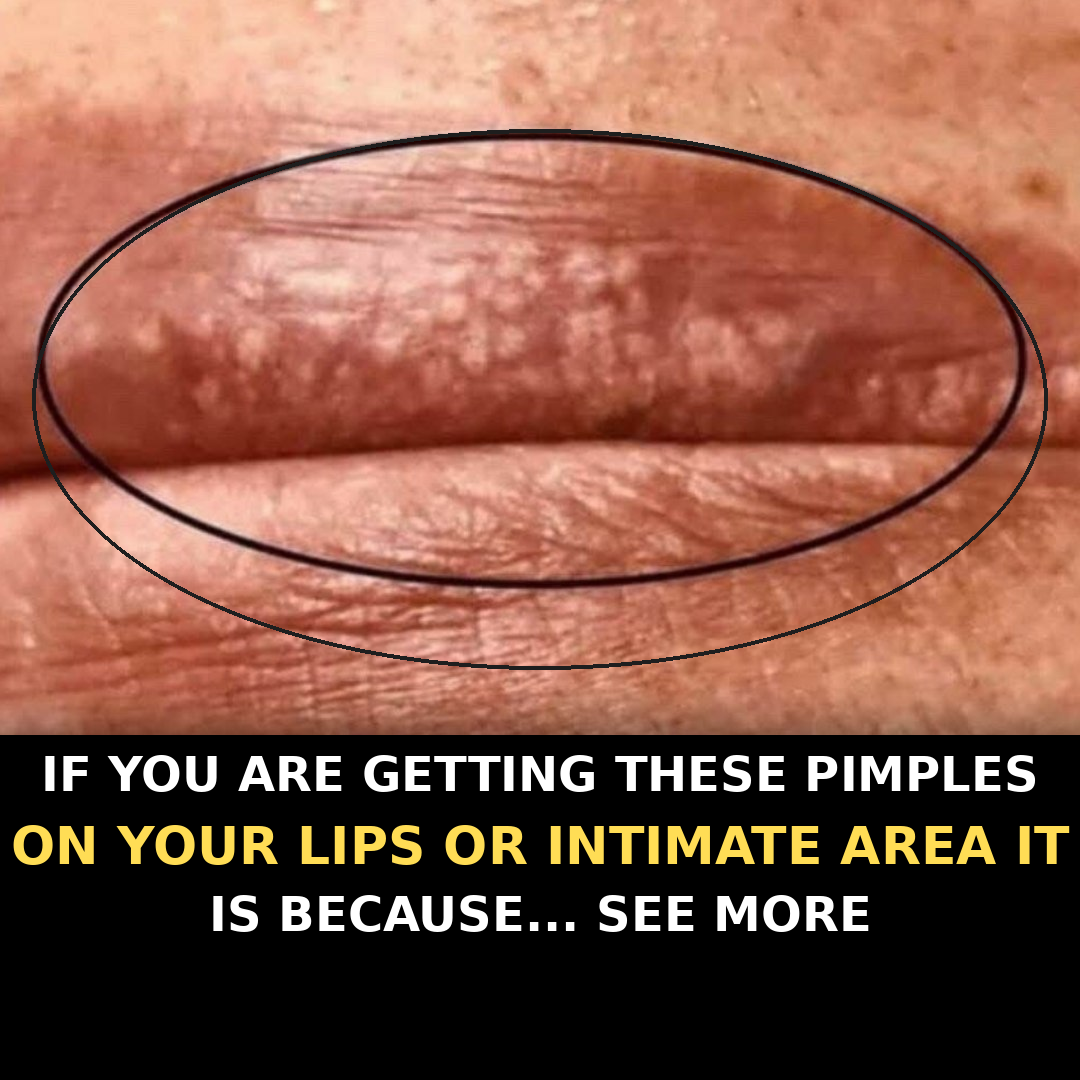
Unmasking the mystery of Fordyce spots: are they harmful or just a skin quirk?
Finding unexpected texture on your skin—especially in sensitive areas like the lips or personal zones—can be a source of immediate anxiety. Your mind might jump to concerns about hygiene or transmissible conditions. However, the image you are seeing often represents a very common, non-threatening biological occurrence known as Fordyce spots.
What Exactly Are These Small White Bumps?
These tiny, pale, or yellowish-white spots are actually ectopic sebaceous glands. Under normal circumstances, sebaceous glands (which produce oil) are associated with hair follicles. Fordyce spots are simply oil glands that appear on surfaces of the body where there is no hair.
Appearance: They usually measure 1 to 3 millimeters in diameter.
Sensation: They are typically painless, do not itch, and do not cause inflammation.
Prevalence: It is estimated that up to 80% of adults have them. They are a natural part of human anatomy rather than a “disease.”
Common Locations and Identification
Mụn mọc quanh miệng là do đâu? Làm sao để nhanh khỏi?
Because these spots appear in areas with thin skin, they become more visible when the skin is stretched. You will most commonly find them in these locations:
Location Appearance Characteristics
The Vermilion Border Along the edge where your lips meet the skin of your face.
Oral Mucosa Inside the cheeks or on the gums.
Sensitive Zones On personal or intimate skin, often appearing in clusters.
Note: Unlike certain viral concerns, these spots are not “contagious.” They cannot be spread to others through contact because they are a structural part of your own skin.
Why Do They Appear?
While people are often born with these glands, they usually aren’t visible until puberty. During the teenage years, hormonal shifts increase the activity of sebaceous glands, making them enlarge and become visible through the skin.
They are not caused by:
Poor hygiene.
Lifestyle choices.
External “contamination.”
Distinguishing Them from Other Concerns
It is vital to differentiate these harmless spots from conditions that might require medical attention.
Viral Blisters: Usually painful, fluid-filled, and they eventually crust over or scab. Fordyce spots remain constant and do not “heal” or change rapidly.
Skin Growths: Other growths might have a “cauliflower” texture or be fleshy and raised. Fordyce spots are generally flat or only slightly elevated and uniform in shape.
Acne: Standard pimples involve a blocked pore and often show redness or swelling. Fordyce spots do not become “whiteheads” in the traditional sense.
Should You Seek Treatment?
From a medical standpoint, no treatment is necessary because they are a benign (harmless) variation of normal skin. However, some individuals choose to address them for aesthetic reasons.
Available Professional Options:
Laser Therapy: Using specific light wavelengths to minimize their appearance.
Topical Applications: Certain vitamin-A based creams may help reduce the visibility over time.
Micro-punch Surgery: A precise method to remove individual spots if they are particularly prominent.
Important Safety Warning
Never attempt to “pop” or squeeze these spots. Because they are glands embedded in the skin and not “clogged dirt,” squeezing them will only cause trauma, bruising, and potential infection to the delicate tissue.
Summary and Peace of Mind
If you notice these uniform, painless bumps, take a deep breath. In the vast majority of cases, they are simply a sign that your skin is doing its job of producing natural oils. They are a common human trait that most people simply don’t talk about openly.
If you notice a sudden change—such as the spots becoming itchy, painful, or spreading rapidly with a different texture—it is always best to consult a healthcare professional for a formal evaluation. Otherwise, they are just a small, normal part of your unique biology.