What Your Nails Reveal: A Guide to Health Indicators
Most people view fingernails as a purely aesthetic feature—something to be groomed, polished, or ignored. However, your nails serve as a biological window, offering significant insights into your internal well-being. Alterations in their pigmentation, architecture, or consistency can often act as early warning signs of underlying physiological shifts.
While not every minor change is a cause for alarm, specific visual cues warrant professional attention. If you observe any of the following developments, it may be prudent to consult a healthcare provider.
1. Pallid or Alabaster Nails
If your nails lose their healthy pink glow and appear unusually pale or nearly white, it may be a symptom of anemia, liver dysfunction, or significant nutritional gaps. The natural pinkish hue of a healthy nail comes from the blood vessels beneath the plate. When this color vanishes, it often suggests a reduction in red blood cell counts or compromised circulation. If this paleness is accompanied by lightheadedness or chronic fatigue, medical screening is recommended.
2. Saffron or Yellow Discoloration
Yellowing of the nail plate is frequently a sign of a fungal infection, which often causes the nail to become brittle or thickened. However, persistent yellowing that does not respond to topical treatments can occasionally be linked to more complex conditions, including thyroid imbalances, respiratory disorders, or diabetes.
3. Cyanotic (Blue or Purple) Tones
A bluish or purplish tint to the nail bed is a clinical sign that the blood may not be carrying sufficient oxygen. This condition, often termed cyanosis, can be associated with cardiac or pulmonary issues. If you notice a blue tint alongside chest pressure or difficulty breathing, seek immediate medical evaluation.
4. Longitudinal Dark Streaks
A vertical dark line appearing beneath the nail can sometimes be benign, particularly in individuals with higher melanin levels. However, if a dark streak appears suddenly, grows in width, or has irregular borders that bleed into the cuticle, it must be examined by a dermatologist to rule out subungual melanoma, a serious form of skin cancer.
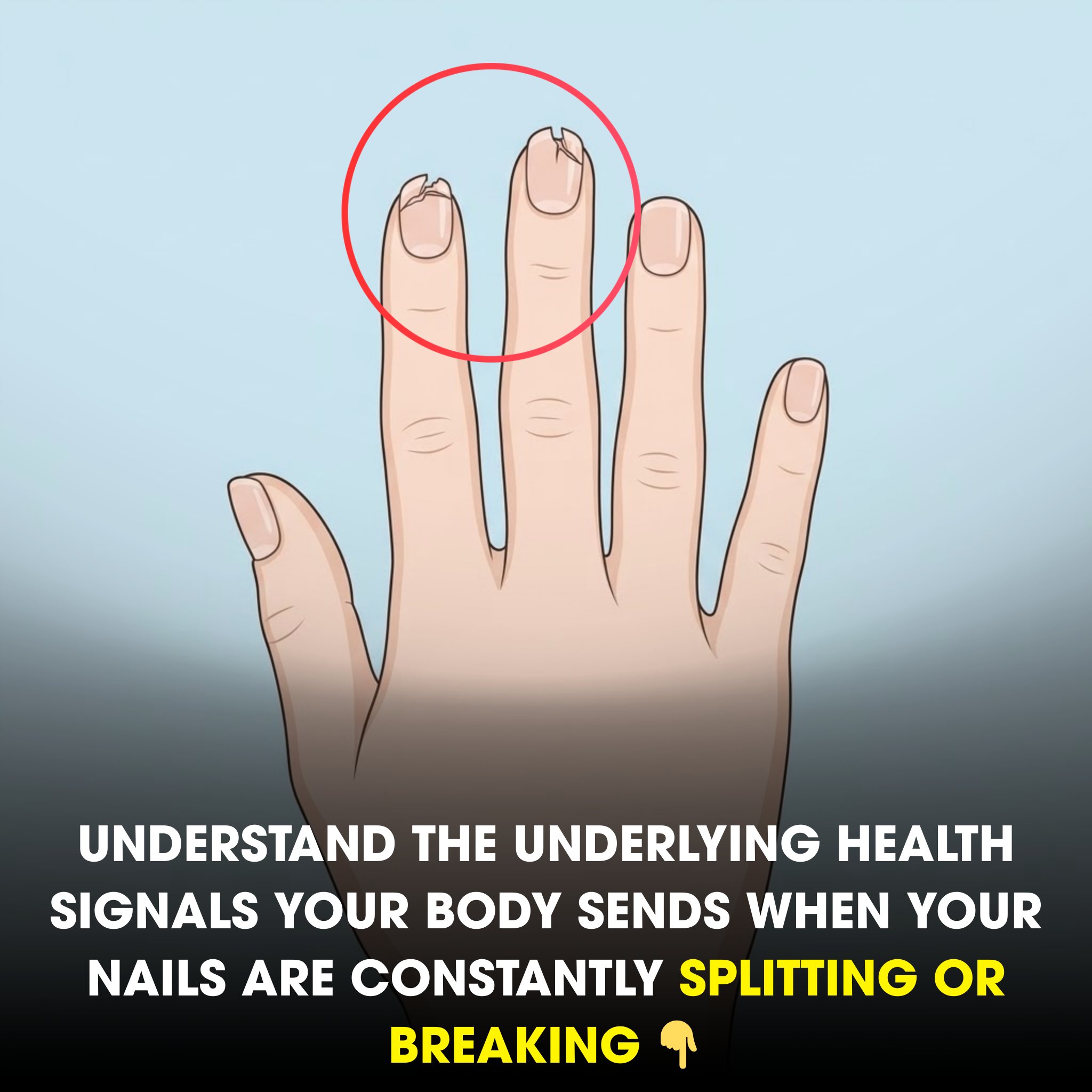
5. Fragility, Cracking, or Peeling
While brittle nails are often the result of external factors—such as frequent exposure to water or harsh cleaning chemicals—persistent fragility can also stem from internal issues. Chronic brittleness is sometimes connected to thyroid dysfunction or deficiencies in essential nutrients like iron or biotin. If moisturizers and protective habits don’t resolve the issue, a nutritional check-up may be necessary.
6. Concave or Spoon-Shaped Nails
When the nail plate thins and the edges curve upward to create a central depression—a condition known as koilonychia—it is often a hallmark sign of iron-deficiency anemia. This unusual “spooning” effect suggests the body is struggling with its iron stores, which can lead to broader symptoms like weakness and exhaustion.
7. Digital Clubbing (Bulbous Fingertips)
Clubbing involves a gradual enlargement of the fingertips accompanied by nails that curve sharply downward over the ends of the fingers. This structural change often develops slowly over months or years and is frequently linked to chronic heart or lung diseases. Because the progression is subtle, many people do not notice the change until it is advanced.
8. Transverse Grooves (Beau’s Lines)
Deep horizontal indentations running across the width of the nail are known as Beau’s lines. These grooves typically appear after the body has experienced a period of extreme systemic stress, such as a severe infection, high fever, or intense physical trauma. They signify a temporary pause in nail growth as the body redirects its energy toward recovery.
Understanding the Timeline of Change
It is important to keep in mind that fingernails grow at a slow pace; therefore, a visible change might represent a health event that occurred weeks or even months prior. While a single abnormality isn’t always a sign of a critical condition, sudden or persistent transformations should not be ignored.
Your nails are more than a cosmetic detail—they are subtle messengers. By paying attention to these physical cues and seeking professional guidance when something appears unusual, you can take a proactive role in managing your long-term health. If your nails show a significant departure from their normal appearance, a simple medical evaluation can provide clarity and peace of mind.