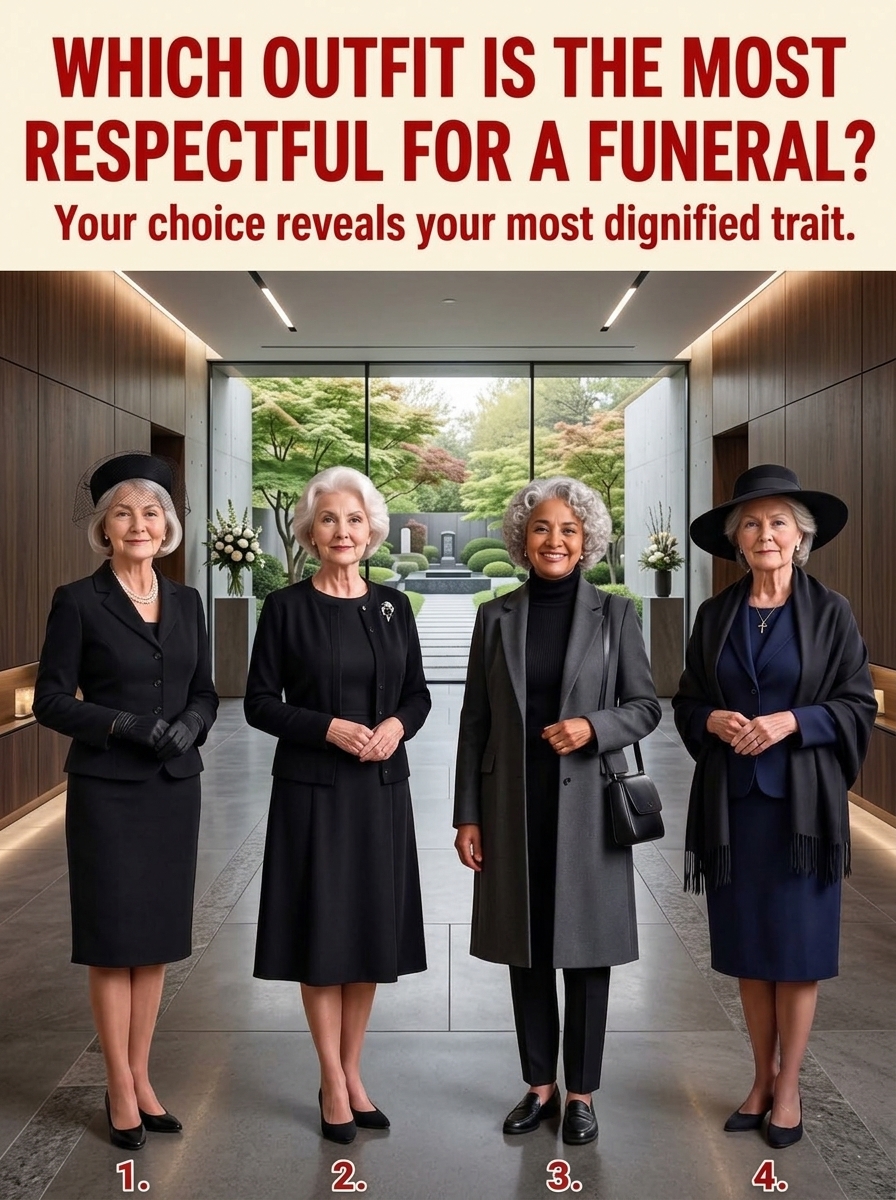
The Psychology of Funeral Etiquette: What Personal Dress Choices Reveal About Character and Social Values
Attire worn during moments of mourning serves a dual purpose in human culture. On a societal level, formal mourning dress communicates shared grief, respect for the deceased, and adherence to established social rituals. On a psychological level, visual preferences—even within strict formal constraints—reflect deeply ingrained character traits, personal values, and emotional coping mechanisms.
When presented with visual choices regarding solemn attire, an individual’s preference reveals how they navigate formality, emotional expression, interpersonal support, and tradition.
1. The Cultural and Historical Evolution of Funeral Attire
The tradition of wearing specific clothing during funeral services dates back thousands of years. Historically, black clothing represented the absence of light and joy, signaling to the community that an individual was in a state of bereavement.
During the Victorian era under Queen Victoria, mourning attire became governed by rigid protocols. Women were expected to wear heavy black fabrics such as silk crepe, accompanied by dark veils and muted accessories, for extended periods following a loss. In modern contemporary society, while rules surrounding mourning clothes have relaxed significantly, maintaining high standards of dignity, modesty, and dark color palettes remains a universal norm across formal services.
2. Comprehensive Personality Analysis by Outfit Choice
Personality testing through visual evaluation relies on projective psychology. When choosing which outfit is perceived as most respectful, an individual projects their internal values regarding respect, social duty, and emotional presence onto the visual options.
Option 1: The Formal Traditionalist
Visual Components
A tailored black suit jacket paired with a structured knee-length skirt, paired with a veiled pillbox hat, black leather gloves, and a classic pearl necklace.
Psychological Profile and Character Trait
Selecting Option 1 reflects Absolute Integrity and Steadfast Loyalty. Individuals who favor this style place a high value on protocol, order, and honoring traditional social commitments.
-
Reverence for Protocol: Believes that adhering strictly to established customs is the highest form of showing respect to the deceased and their family.
-
Emotional Self-Control: Demonstrates exceptional composure during difficult circumstances, providing a stable presence for others.
-
Principled Conduct: Governed by strong internal moral standards, prioritizing duty over personal convenience.
Option 2: The Understated Classic
Visual Components
A minimalist black midi dress paired with a matching structured cardigan, subtly elevated with a silver brooch and simple pumps.
Psychological Profile and Character Trait
Selecting Option 2 indicates Quiet Empathy and Deep Emotional Balance. This choice reflects a belief that true respect does not require elaborate display, but rather clean, unpretentious elegance.
-
Sincere Presence: Focuses on offering genuine emotional support rather than drawing attention to oneself.
-
Thoughtful Consideration: Exhibits high emotional intelligence, carefully balancing personal presentation with social sensitivity.
-
Inner Grace: Maintains a calm, balanced approach to life’s challenges, relying on quiet strength rather than dramatic displays.
Option 3: The Contemporary Pragmatist
Visual Components
A modern charcoal grey tailored overcoat layered over a dark turtleneck, combined with black trousers, structured leather loafers, and a practical shoulder bag.
Psychological Profile and Character Trait
Selecting Option 3 corresponds to Grounded Strength and Practical Dependability. Preferring tailored trousers and clean modern tailoring highlights an active, supportive approach to difficult social situations.
-
Action-Oriented Support: Shows care through tangible assistance, offering practical help to grieving families.
-
Authenticity: Values comfort and functionality while maintaining complete respect for formal environments.
-
Resilience: Serves as a reliable anchor during crises, handling responsibilities efficiency and without fuss.
Option 4: The Solemn Guardian
Visual Components
A dark navy tailored dress jacket layered with a soft black wrap shawl, completed with a wide-brimmed black hat and subtle devotional jewelry.
Psychological Profile and Character Trait
Selecting Option 4 reveals Serene Wisdom and Compassionate Depth. Incorporating dark navy tones alongside black accessories represents a nuanced understanding of solemnity, grace, and comfort.
-
Spiritual & Emotional Depth: Views memorial gatherings as sacred spaces requiring deep contemplation and respect.
-
Protective Instincts: The choice of a soft wrap shawl symbolizes warmth, shelter, and a desire to provide emotional comfort to surrounding loved ones.
-
Mature Perspective: Possesses a broad, thoughtful understanding of life, offering comforting guidance during times of loss.
3. The Psychology of Color in Funeral Attire
Color choice in formal dress plays a crucial psychological role in communicating emotional states and social intent.
| Color Palette | Psychological Association | Social Context |
| Monochrome Black | Formal grief, absolute reverence, tradition. | Standard protocol for immediate family and traditional services. |
| Dark Charcoal Grey | Neutrality, composure, modern respect. | Suitable for modern memorial services and practical support roles. |
| Deep Navy Blue | Calmness, trust, quiet devotion. | Frequently chosen as a dignified alternative to solid black. |
4. Modern Trends in Funeral Etiquette
In recent years, memorial services have evolved to incorporate celebrations of life alongside traditional grieving ceremonies. This shift has influenced dress standards in several notable ways:
-
Individualization Within Bounds: While dark colors remain standard, subtle personal touches—such as family heirlooms, brooches, or muted textures—are increasingly accepted.
-
Comfort as Respect: Wearing clean, well-fitting tailored garments that allow ease of movement reflects a focus on being present to assist others.
-
Cultural Adaptability: Different cultures integrate unique color symbolism and garments into mourning services, emphasizing that respect is ultimately measured by intent and conduct rather than rigid compliance.
Conclusion
Determining which outfit is most respectful ultimately depends on how an individual defines reverence. Whether through the strict traditionalism of Option 1, the clean elegance of Option 2, the modern functionality of Option 3, or the serene warmth of Option 4, every choice reflects a distinct aspect of dignity. Understanding these visual choices offers valuable insight into human character, showing that true dignity is expressed through integrity, empathy, dependability, and wisdom.