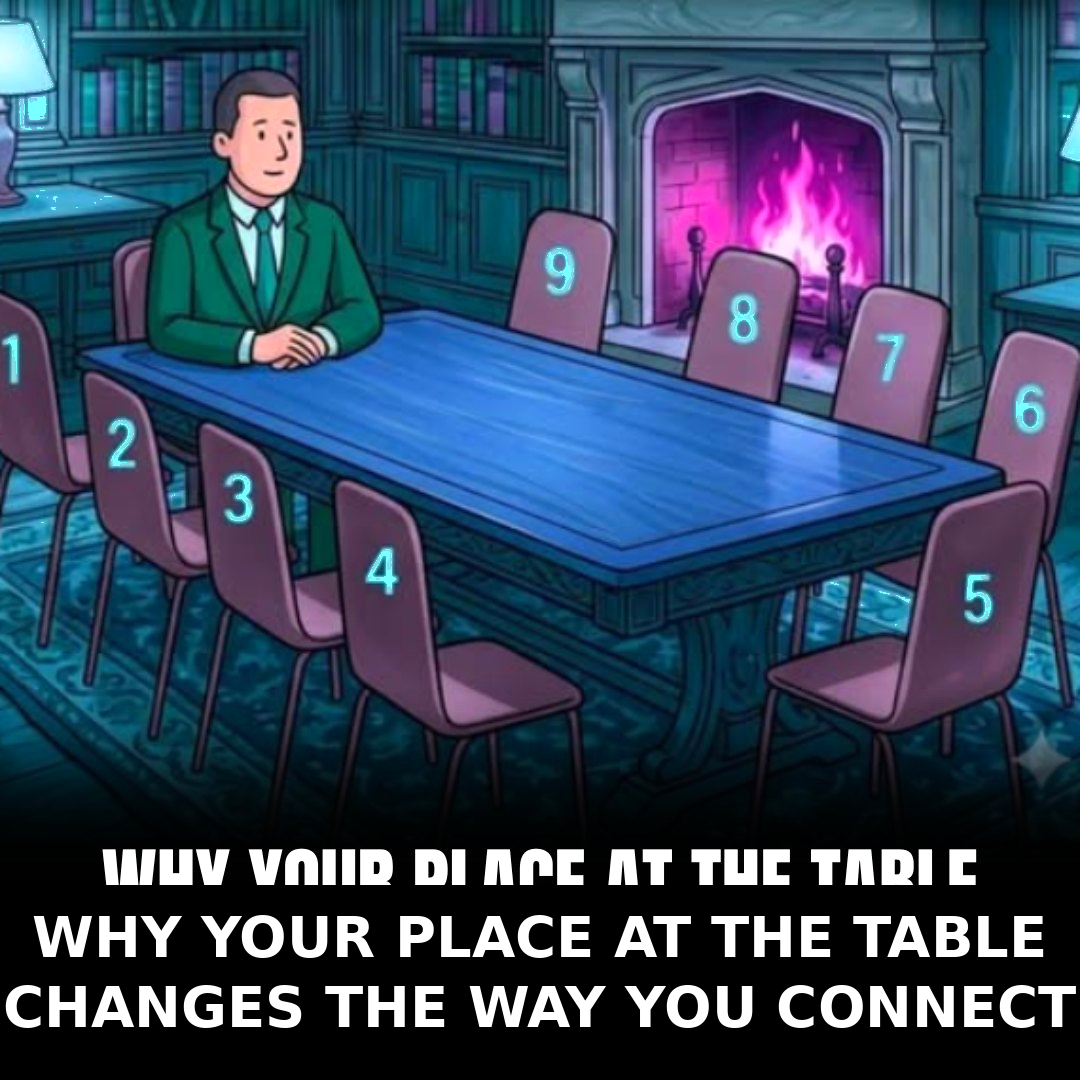
The Hidden Power of Seating: Why Where You Sit Matters
Every time you enter a room—whether it is a high-stakes corporate boardroom, a cozy cafe for a first date, or a bustling family dinner—you make a split-second decision that defines your entire interaction: where to sit. While it might seem like a random choice, the science of proxemics suggests otherwise. Your place at the table is a silent declaration of your role, your intentions, and your subconscious level of comfort with those around you.
1. Positions 1 & 9: The Seat of Authority
Traditionally, the ends of a rectangular table are reserved for the “Head of the Table.” In a professional context, this is usually where the leader or the facilitator sits.
The Advantage: This position offers the best line of sight to everyone in the room, symbolizing authority and control.
The Vibe: Sitting here makes you the focal point. It is the ideal spot if you need to direct a meeting or provide a central summary. However, it can also create a psychological barrier, making you appear less approachable.
2. The Collaborative Corner (Positions 4 & 5)
Positions that create a 90-degree angle (like sitting at the corner) are statistically the most effective for building rapport.
Why it works: This layout allows for easy eye contact without the “confrontational” feel of sitting directly across from someone.
Best for: First dates, mentorship sessions, or collaborative brainstorming. It feels supportive rather than demanding.
3. The Side-by-Side Alliance (Positions 2 & 3)
Sitting side-by-side suggests you are “on the same team.” While this is excellent for solidarity and working on a shared task (like looking at a laptop together), it makes natural conversation difficult because you cannot easily see the other person’s facial expressions.
4. The “Face-Off” (Sitting Directly Opposite)
Sitting directly across from someone (e.g., Position 3 vs. Position  often creates a competitive environment. The table acts as a physical barrier.
The Impact: This setup is common in formal negotiations or interviews. If your goal is to reduce tension, try to shift to a slightly angled position rather than staying perfectly centered.
Pro Tip: If you want to influence the conversation without being the “boss,” try sitting in the middle of the long side. This puts you in the “hub” of the interaction, allowing you to bridge gaps between different groups.
Strategies for Success
To Negotiate: Position yourself at a slight angle to soften the “us vs. them” vibe.
To Socialize: Aim for the center seats to stay connected to both ends of the table.
To Listen: Sit further away from the “power seats” (1 and 9) to observe the room dynamics without being pressured to speak.
Understanding the geometry of communication is a subtle yet powerful tool. Next time you walk into a meeting, don’t just take the first available chair—choose your impact.